
The simplest approach to wine pairing is matching weight for weight: light wines with lighter dishes, fuller wines with richer ones. If you know that basic principle and understand which style your bottle falls into, you can build a confident menu around it without needing any formal wine knowledge.
Whether you are planning a dinner party, a birthday, or a quiet celebration at home, the guide below covers every major wine style, explains the reasoning behind each pairing, and gives you a quick-reference table to use when you are choosing a bottle.
If you are still getting familiar with grape varieties and styles, understanding the types of wine before selecting a pairing will make the choices below far clearer.
Quick Wine Pairing Chart
| Wine Style | Examples | Best Food Matches |
|---|---|---|
| Light Dry White | Sauvignon Blanc, Pinot Grigio, Albarino, Gruner Veltliner | Salads, seafood, light pasta, poultry, green vegetables |
| Sweet White | Riesling, Chenin Blanc, Moscato | Soft cheeses, cured meats, spiced or dry fish dishes, desserts |
| Rich White | Chardonnay, Viognier, Oaked Whites | Rich fish, seafood in sauce, roasted vegetables, poultry |
| Sparkling | Champagne, Prosecco, Cava, Franciacorta | Salty appetisers, soft and hard cheeses, fried foods, light fish |
| Light Red | Pinot Noir, Grenache, Gamay, Pinotage | Grilled salmon, lamb, chicken, mushroom dishes, Japanese cuisine |
| Medium Red | Sangiovese, Merlot, Cabernet Franc, Tempranillo | Hard cheeses, white meat, red meat, cured and smoked meats |
| Big Red | Cabernet Sauvignon, Shiraz/Syrah, Zinfandel, Aglianico | Steaks, game meat, aged hard cheese, rich stews |
| Dessert Wine | Port, Tawny Port, Sherry, Late Harvest, Tokaji | Soft cheeses, sweet desserts, dark chocolate, cured meats |
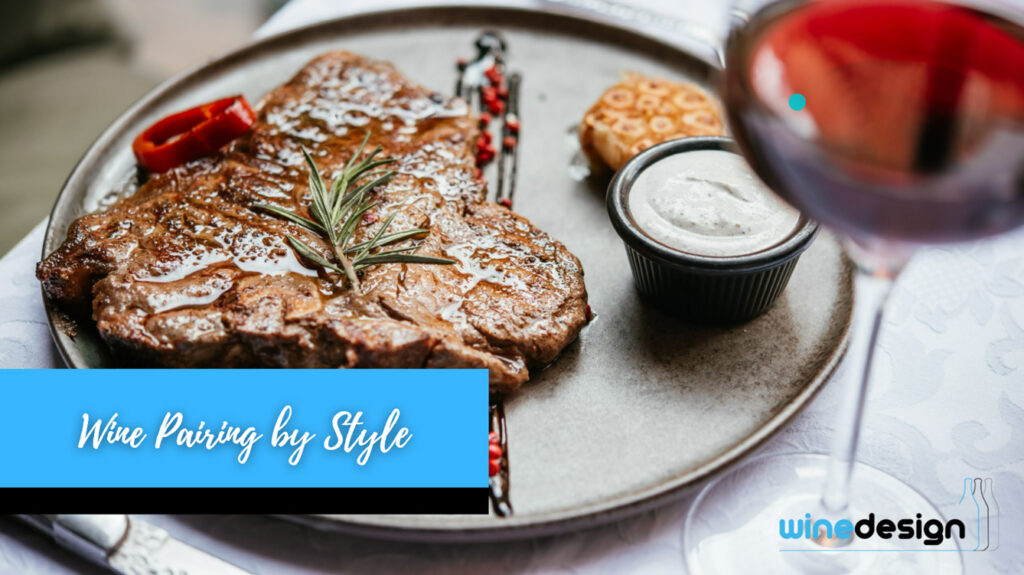
Wine Pairing by Style
Light Dry White
Sauvignon Blanc, Pinot Grigio, Albarino, and Gruner Veltliner are the main examples of this style. Their high acidity and herbal character cut through light textures without overwhelming them.
These wines work well with green or roasted vegetables, salads, bread, lighter pasta, fish, and anything that is mild in flavour. A Sauvignon Blanc is particularly versatile for seafood and poultry because its brightness lifts the natural flavours of both without competing with them.
Sweet White
Riesling, Chenin Blanc, and Moscato sit in this category. The natural residual sweetness in these wines makes them one of the more forgiving styles at the table.
They pair well with soft cheeses, cured and smoked meats, carb-based dishes, and desserts. A Riesling with some residual sweetness is an especially reliable choice for spiced or dry preparations of fish, chicken, and pork, because the sweetness balances heat or dryness in the dish.
Rich White
Chardonnay, Viognier, and oaked whites belong here. The combination of body, texture, and in many cases oak-derived richness means these wines need food that can match them.
Roasted vegetables, fish in a cream or butter sauce, seafood, and poultry in rich preparations are all well-suited. A well-made Chardonnay paired with chicken or fish in a lush sauce is one of the most reliable white-wine combinations for a celebratory dinner.
Sparkling Wine
Champagne, Prosecco, Cava, and Franciacorta are the most commonly served sparkling styles. Their carbonation and acidity act as a palate cleanser, which is why they suit salty and fatty foods so effectively.
These wines work with green vegetables, soft and hard cheeses, fried appetisers, and delicate fish. Sweeter styles of Champagne and sparkling wine are a natural counterpoint to anything salty.
Light Red
Pinot Noir, Grenache, Gamay, and Pinotage are lighter in tannin than their big-red counterparts, which makes them unusually flexible at the table.
They suit roasted vegetables, pasta, seafood, and white meat. A premium Pinot Noir, in particular, works alongside grilled salmon, lamb, chicken, or dishes built around earthy ingredients such as mushrooms and root vegetables, because the wine shares those same earthy, savoury qualities.
Medium Red
Sangiovese, Merlot, Cabernet Franc, and Tempranillo fall in the middle of the red-wine spectrum. Their moderate tannin and acidity give them broad food compatibility.
These styles pair with hard cheeses, white meat, red meat, and cured or smoked meats. Merlot’s softer tannin structure and plummy character mean it rarely clashes with any of these, which makes it a reliable pour when your guests are choosing from a mixed menu.
Big Red
Cabernet Sauvignon, Shiraz (also labelled Syrah), Zinfandel, Mourvedre, and Aglianico are the boldest red styles. Their high tannin and body need the fat and protein in substantial food to balance them.
Serve these with steaks, beef, wild game, aged hard cheeses, and slow-cooked stews. A Shiraz is especially suited to juicy, charred meats because the wine’s pepper and dark-fruit character intensifies alongside the caramelised flavours that come from the grill or the oven.
Dessert Wine
Port, Tawny Port, Sherry, Late Harvest wines, and Tokaji close the progression. Because they are already sweet and concentrated, they need food that either matches that sweetness or provides a savoury contrast.
Soft cheeses, dark chocolate, dried fruits, cured meats, and most desserts work here. Avoid pairing dessert wines with very dry savoury mains, where the contrast becomes unpleasant rather than interesting.
General Wine Pairing Rules
These principles work across every style listed above.
- Match weight for weight. Dark, full-bodied wines belong with heavier foods; lighter wines with lighter dishes.
- Wine should be sweeter than the food. If the food is sweeter than the wine, the wine will taste bitter and thin.
- Wine should be more acidic than the food. A wine with lower acidity than the dish will taste flat and heavy.
- Earthy food and earthy wine enhance each other. The same is true of acidic pairings. Avoid matching two bitter elements, which will amplify each other.
- Sweet wine balances salty food. Salty appetisers and cheese boards are natural partners for off-dry and sweet styles.
- Fatty foods need a wine with grip. A wine with noticeable tannin, acidity, or alcohol will cut through fat rather than sit beneath it.
Choosing the right glass is also part of serving wine well. The shape affects how aromas concentrate and how the wine lands on the palate, so pairing your bottle with the which wine glass to use guidance for that variety is a small step that makes a noticeable difference.
Frequently Asked Questions
What is the simplest rule for pairing wine with food?
Match weight for weight: lighter wines with lighter foods and fuller, darker wines with heavier dishes. Keep the wine slightly sweeter and more acidic than the food so it does not taste bitter or fatty.
Which wine styles work best for a mixed celebration menu?
Offer a versatile spread: a Light Dry White such as Sauvignon Blanc for salads and seafood, a Medium Red such as Merlot for white and red meats, and a Sparkling Wine for salty appetisers and cheese.
Does an expensive wine always pair better?
Price does not determine pairing success. A well-chosen, modestly priced bottle that matches the food’s weight and flavour profile will outperform an expensive bottle selected without regard for what is on the plate.
Can red wine be served with fish?
Yes, in some combinations. Light reds such as Pinot Noir and Gamay work alongside salmon and tuna because they share savoury, earthy qualities with those fish. Avoid high-tannin reds with delicate white fish, where the tannin makes the fish taste metallic.
What wine works with a grazing or cheese board?
Sparkling wines, off-dry whites, and light reds are all reliable. For a board that mixes soft cheeses, cured meats, and fruit, a Prosecco or a light Pinot Noir covers most elements without clashing with any.
Wine Design is based in Pokolbin in the Hunter Valley. Contact Wine Design for personalised recommendations on selecting and gifting wines for any occasion.
